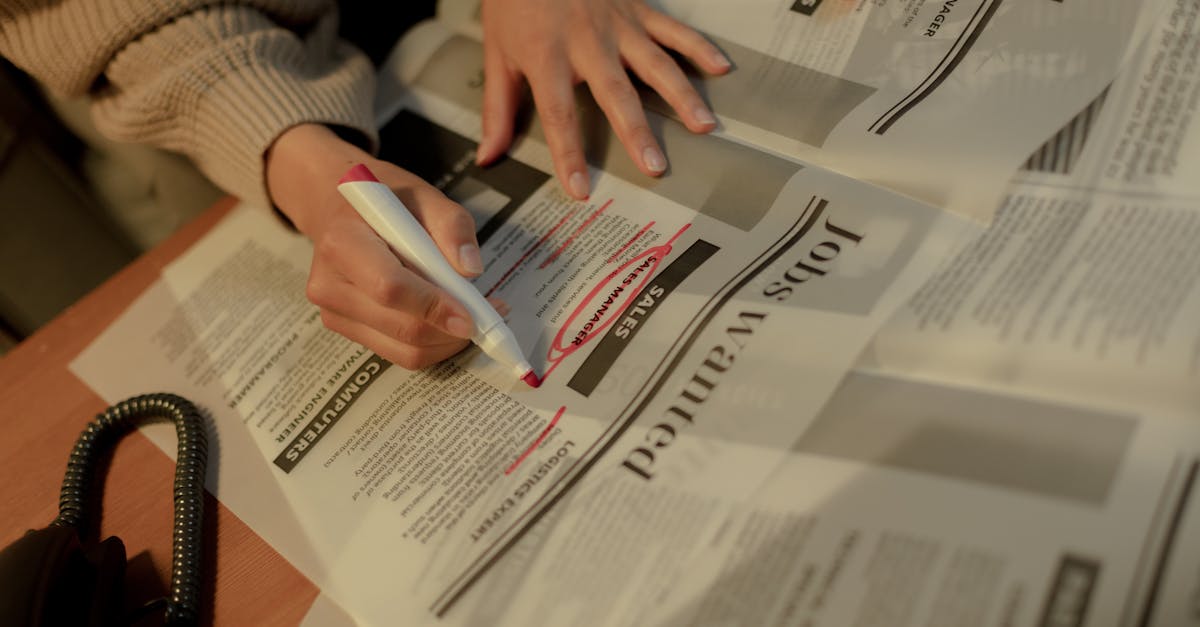
Why Your Resume Gets Ignored (And The 3 Crucial Shifts That Get You Noticed)
Are you sending out dozens, even hundreds, of resumes and hearing nothing back? It’s a frustrating, soul-crushing experience that most job seekers know all too well. You spend hours meticulously crafting each application, tailoring your cover letter, only to face a deafening silence. In today’s competitive job market, simply listing your job duties and achievements isn’t enough. Your resume isn’t just a document; it’s a marketing tool, and if it’s not designed to grab attention in a matter of seconds, it’s getting sent straight to the digital discard pile.
I’ve coached countless professionals through this very challenge. The mistake I see most often isn’t a lack of qualifications, but a fundamental misunderstanding of how recruiters actually read resumes. They aren’t spending minutes poring over every detail; they’re scanning for specific signals, often for as little as 6-7 seconds. If your resume doesn’t deliver those signals instantly, it’s overlooked. What changed everything for my clients was shifting their perspective from ‘listing what I’ve done’ to ‘showcasing value for this specific role.’ This isn’t about padding or exaggerating; it’s about strategic presentation and highlighting the impact you can make.
Key Takeaways
- Stop listing duties; quantify your achievements and showcase concrete impact relevant to the target role.
- Ditch generic buzzwords and use industry-specific keywords to pass applicant tracking systems (ATS) and impress human readers.
- Tailor your resume significantly for each application, even if it feels repetitive, focusing on the specific job description.
- Design for scannability with clear formatting, white space, and bolding to guide the recruiter’s eye to key information.
The Fatal Flaw: Listing Duties, Not Quantifying Impact
The single biggest reason resumes get ignored is a failure to move beyond job descriptions. Most people create a resume that reads like a glorified list of responsibilities copied and pasted from their old job postings. While ‘managed a team of five’ or ‘developed marketing campaigns’ might sound professional, it tells a recruiter very little about the value you actually brought to the role.
Think about it from their perspective: they’re trying to solve a problem – finding someone who can deliver specific results. Your resume should answer that question immediately. How many people were on the team? What kind of campaigns? What was the outcome? Did you increase sales by 15%? Reduce costs by $20,000? Complete projects 3 weeks ahead of schedule?
In my experience, simply adding numbers and outcomes can transform a bland resume into a powerful statement. Instead of:
- Responsible for customer service inquiries.
- Managed social media accounts.
- Assisted with project management.
Try:
- Resolved over 50+ customer inquiries daily, maintaining a 95% customer satisfaction rate over two years.
- Increased social media engagement by 40% across three platforms (Facebook, Instagram, LinkedIn) through targeted content strategies, resulting in 10% growth in leads.
- Coordinated 8-10 cross-functional projects annually, consistently delivering within budget and reducing average project completion time by 15%.
These examples show impact. They speak the language of results, which is precisely what hiring managers are looking for. Don’t assume the recruiter will infer your greatness; spell it out clearly and quantify it whenever possible. If you don’t have exact numbers, use approximations like ‘over 50,’ ‘up to 10,’ or ‘approximately 20%.’ The key is to demonstrate that you’re thinking about results.
The Keyword Conundrum: Speaking to Both Bots and Humans
We live in the age of Applicant Tracking Systems (ATS). If your resume isn’t optimized for these digital gatekeepers, it may never even reach a human eye. Many job seekers fail because their resume doesn’t contain the specific keywords that ATS software is programmed to detect. But it’s not just about the bots; human recruiters are also scanning for these terms.
The mistake here is two-fold: either using too many generic, overused buzzwords (like ‘synergy’ or ‘innovative thinker’) or not including the precise, industry-specific terms found in the job description itself. Recruiters are looking for evidence that you understand the role and possess the necessary skills and experience. If the job description repeatedly mentions ‘SEO optimization,’ ‘Python development,’ or ‘B2B sales strategy,’ your resume needs to reflect those terms.
Here’s how to navigate the keyword conundrum:
- Analyze the Job Description: Copy and paste the job description into a word cloud generator (or manually highlight repeated terms). These are your primary keywords.
- Integrate Naturally: Weave these keywords into your summary, experience bullet points, and skills section. Don’t just list them; show how you applied them. For example, instead of a simple ‘Skills: Project Management,’ write: ’Led agile project management methodologies for cross-functional teams, ensuring on-time delivery of 12 key software releases annually.’
- Use Synonyms: Vary your language slightly. If ‘project management’ is a key term, also include ‘project coordination’ or ‘program leadership’ if they fit your experience and the context.
- Avoid Keyword Stuffing: Don’t just create a hidden block of keywords at the bottom of your resume. ATS are sophisticated enough to detect this, and it looks unprofessional to human readers.
Remember, your resume needs to speak to both the machine and the human. A human recruiter, scanning quickly, will also be looking for these recognizable terms to confirm you’re a match. If your resume sounds generic, it signals you haven’t done your homework or aren’t serious about this specific role.
The One-Size-Fits-All Myth: Why Customization is Non-Negotiable
This is perhaps the hardest truth for most job seekers to accept: there is no such thing as a perfect, universally appealing resume. The idea of creating one master resume and blasting it out to every opening is a recipe for rejection. Each job posting is unique, with distinct requirements, company culture nuances, and specific challenges they hope to solve. A generic resume, no matter how well-written, screams ‘I didn’t bother to customize this for you.’
In my experience, this is where most people quit. They see the effort involved in tailoring each resume and opt for the easier, less effective path. But think of it this way: would you use the same marketing pitch for every single potential client, regardless of their needs? Of course not. Your resume is your pitch.
Here’s a practical approach to effective customization that doesn’t feel like starting from scratch every time:
- Create a ‘Master Resume’: This document contains every relevant job, skill, achievement, and project you’ve ever had. It’s your personal data bank, probably 3-4 pages long.
- Analyze Each Job Description: Before you even open your master resume, dissect the job posting. What are the top 3-5 requirements? What skills are mentioned most frequently? What’s the company’s mission or specific projects they highlight?
- Curate, Don’t Create: Open your master resume and pull only the experiences, achievements, and skills that directly align with the job description. If a bullet point or an entire job isn’t relevant to this specific role, leave it out. Your resume should typically be 1-2 pages.
- Rewrite for Relevance: Don’t just copy and paste. Rephrase your bullet points to directly address the requirements of the new role. For example, if your master resume says, ‘Managed client relationships,’ but the job description emphasizes ‘stakeholder communication,’ adjust your language to reflect that.
- Tailor Your Summary: Your professional summary (or objective) should be a concise 3-4 sentence elevator pitch for this specific role. It should immediately tell the recruiter why you’re a perfect fit for their company and their opening.
This process is more strategic and less time-consuming than you might imagine once you get the hang of it. It shows genuine interest, understanding, and respect for the recruiter’s time, making your application stand out from the sea of generic submissions.
The Visual Noise: Why Readability Trumps Flashiness
While content is king, presentation is queen. A resume can have brilliant achievements and perfect keywords, but if it’s visually overwhelming or poorly formatted, a recruiter’s eye will simply glide over it. Many job seekers make the mistake of either trying to be too flashy with elaborate templates or, conversely, presenting a dense, text-heavy block of information. Both are fatal.
Recruiters are sifting through hundreds of documents. They need to extract key information quickly. A resume that’s difficult to scan is a resume that gets ignored. In my experience, a clean, professional, and highly readable layout is far more effective than any intricate graphic design.
Focus on these elements to optimize for scannability:
- Clear Headings and Subheadings: Use consistent, easily identifiable headings (e.g., ‘Experience,’ ‘Education,’ ‘Skills’) to break up the document. Use bolding to make them pop.
- Ample White Space: Don’t cram every inch with text. White space makes your resume feel less daunting and more inviting to read. Margins should be at least 0.5 to 1 inch.
- Bullet Points, Not Paragraphs: Every single piece of experience or achievement should be presented as a concise bullet point. Avoid long, rambling paragraphs.
- Consistent Formatting: Use the same font, font size (typically 10-12pt for body text, 14-16pt for headings), and bolding consistently throughout the document. Inconsistencies are distracting.
- Professional Fonts: Stick to professional, easy-to-read fonts like Arial, Calibri, Lato, or Georgia. Avoid overly decorative or trendy fonts that can be hard to read and may not render correctly on different systems.
- Strategic Bolding: Use bolding to highlight key metrics, action verbs, and job titles. Guide the recruiter’s eye to the most important information.
- Reverse Chronological Order: Present your experience and education in reverse chronological order, with your most recent (and most relevant) information first.
Resist the urge to use fancy infographics, colorful charts, or unusual layouts unless you are specifically applying for a design-related role and the job description encourages a creative portfolio. For most corporate roles, a clean, ATS-friendly, and highly scannable traditional resume format is your safest and most effective bet.
Overlooking the Proofread: A Simple Mistake with Big Consequences
It might seem obvious, but grammatical errors, typos, and inconsistent formatting are immediate red flags. In a competitive market, a single mistake can be enough for a recruiter to dismiss your application. It signals a lack of attention to detail, professionalism, and care. In my experience, even the most qualified candidates can sabotage their chances with careless errors.
After spending hours perfecting the content and tailoring it, your eyes become accustomed to the text. You’ll naturally overlook mistakes. This is why a fresh set of eyes is absolutely critical.
Here’s how to ensure a flawless resume:
- Read Aloud: This is a classic trick, but it works. Reading your resume aloud forces you to slow down and catch errors your eyes might skip over when reading silently.
- Print It Out: Seeing your resume on paper often reveals errors that are invisible on a screen. You’ll notice formatting issues and typos more easily.
- Use Spell Check and Grammar Tools: While not perfect, tools like Grammarly or the built-in spell checker in Word or Google Docs can catch obvious errors.
- Get a Second Opinion: Ask a trusted friend, colleague, or mentor to proofread your resume. They’ll spot things you missed. Offer to return the favor.
- Check for Consistency: Ensure all dates, company names, job titles, and formatting are consistent throughout the document. Look for stray spaces, inconsistent capitalization, or different date formats.
- Verify Contact Information: Double-check your phone number, email address, and LinkedIn profile link. An impressive resume is useless if the recruiter can’t reach you.
These seemingly small details build trust and demonstrate your professionalism. Don’t let a preventable error be the reason your otherwise stellar application gets overlooked.
Ignoring the Cover Letter (or Writing a Generic One)
The cover letter is often treated as an afterthought, or worse, a formality to be completed with a generic template. This is a massive missed opportunity. A compelling, tailored cover letter is your chance to tell a story that your resume can’t. It’s where you connect your skills and experiences to the company’s specific needs and show genuine enthusiasm for this particular role.
Many job seekers make the mistake of simply reiterating what’s already on their resume, which is a waste of precious space and the recruiter’s time. In my experience, a strong cover letter doesn’t just list qualifications; it demonstrates personality, passion, and a clear understanding of the company’s mission and the role’s challenges.
To write a cover letter that gets read and remembered:
- Address It Specifically: Always address the hiring manager by name if possible. A quick LinkedIn search can often reveal this information. If not, use ‘Hiring Manager’ or ‘Recruiting Team.’ Avoid ‘To Whom It May Concern.’
- Open with a Hook: Start with a sentence that immediately grabs attention and demonstrates your knowledge of the company or the role. Something like: “Having followed [Company Name]’s innovative work in [specific industry area] for some time, I was particularly drawn to your opening for a [Job Title]…”
- Connect the Dots: Dedicate a paragraph or two to explicitly linking your top 2-3 most relevant experiences or achievements to the core requirements of the job. Use anecdotes or mini-case studies to illustrate your impact. This is your chance to expand on a key resume bullet point with more context and storytelling.
- Show, Don’t Just Tell Enthusiasm: Don’t just say you’re ‘excited’ about the role. Explain why. Reference specific company projects, values, or recent news that resonate with you. This proves you’ve done your research and are genuinely interested, not just spamming applications.
- Keep It Concise: A cover letter should ideally be one page, no more than three to four paragraphs. Recruiters are busy, and brevity is appreciated.
- Call to Action: End with a confident closing that reiterates your interest and expresses eagerness for an interview. “I am confident my [specific skill 1] and [specific skill 2] align perfectly with your team’s needs, and I am eager to discuss how I can contribute to [Company Name]’s continued success. Thank you for your time and consideration.”
A personalized, thoughtful cover letter often makes the difference between an ignored application and an interview invitation. It’s your opportunity to make a human connection before they even look at your qualifications.
Neglecting Your Online Presence: The Invisible Resume
In today’s digital age, your online presence is an extension of your resume. Many job seekers spend countless hours perfecting their resume and cover letter, only to neglect the first thing a recruiter will often do: look you up online. Whether it’s your LinkedIn profile, personal website, or even social media accounts, these digital footprints either reinforce your professional brand or raise red flags.
The mistake here is assuming that what happens online stays online, or that a recruiter won’t bother to look beyond your application documents. In my experience, a strong, consistent online presence acts as a powerful endorsement of your resume, while a weak or unprofessional one can silently torpedo your chances.
Here’s how to ensure your online presence works for you:
- Optimize Your LinkedIn Profile: This is your primary professional online resume. Ensure it’s fully updated, reflects the same keywords and achievements as your tailored resume, and includes a professional headshot. Get recommendations and endorsements.
- Clean Up Social Media: A quick privacy audit of your public social media accounts is crucial. Delete or privatize anything that could be perceived as unprofessional, negative, or controversial. Remember, what you post reflects on your judgment.
- Build a Professional Online Footprint: If applicable to your industry (e.g., tech, creative, writing), consider having a personal website or online portfolio. This is a fantastic way to showcase projects, thought leadership, and personality that a traditional resume can’t.
- Google Yourself: Regularly Google your name (and any professional aliases) to see what comes up. Address any outdated or negative information you find.
- Show Professional Engagement: Engage positively in online professional communities, share relevant industry articles, or comment thoughtfully on posts. This demonstrates your passion and current industry knowledge.
Your online presence isn’t just a background check; it’s an opportunity to strengthen your brand and provide additional evidence of your expertise and experience. Treat it as an active part of your job application strategy.
Frequently Asked Questions
How long should my resume be?
For most professionals with less than 10 years of experience, a one-page resume is ideal. If you have extensive experience (10+ years), significant publications, or a very complex career history relevant to the role, two pages can be acceptable. The key is to be concise and ensure every piece of information on the page adds value and relevance to the target job.
Is a functional resume better than a chronological one?
For most roles, a reverse chronological resume is strongly preferred. It’s what recruiters expect and what ATS are best at processing. Functional resumes, which emphasize skills over work history, often raise red flags because they can obscure employment gaps or lack of relevant experience. Only consider a functional format if you have significant, unavoidable gaps in employment or are making a drastic career change where your skills are far more relevant than your past job titles.
Should I include a photo on my resume?
Generally, no. In many Western countries (e.g., U.S., Canada, UK), including a photo can introduce bias and is often explicitly advised against. It also takes up valuable space. The exception might be for roles in modeling, acting, or specific international markets where it’s a cultural norm. When in doubt, leave it out.
How far back should my work history go?
Typically, you should go back 10-15 years in your work history. For very senior professionals, sometimes 20 years is acceptable, but focus on the most relevant experience within that timeframe. Older, less relevant roles can often be summarized or excluded entirely to keep your resume concise and focused on current skills and contributions.
What if I don’t have quantifiable achievements?
It can be challenging, but almost every role has an impact that can be quantified. Think about scale (how many projects, clients, tasks?), frequency (how often?), efficiency (did you save time, reduce steps?), quality (improved accuracy, satisfaction scores?), or resources (did you save money, manage budgets?). Even if you don’t have exact numbers, use approximations or relative comparisons (e.g., ‘improved process efficiency,’ ‘increased stakeholder satisfaction’). The effort to quantify shows you’re results-oriented.
Conclusion
Getting your resume noticed in a crowded job market isn’t about luck; it’s about strategy. By shifting your focus from simply listing duties to showcasing quantified impact, optimizing for keywords, customizing for each specific role, ensuring visual readability, proofreading meticulously, and leveraging your online presence, you dramatically increase your chances of moving from the ignored pile to the interview shortlist. Stop asking what you did and start asking what difference you made. This fundamental shift will not only transform your resume but also how you approach your job search, making it far more effective and, ultimately, successful.
Written by Sarah Miller
Productivity & Mindset
A former life coach with a passion for simplifying complex challenges into achievable steps.
You Might Also Like

Why Your DIY Smart Home Routines Feel More Like a Chore (And What Actually Works for Real Convenience)
Smart home routines promise automation, but often fail. Learn why DIY setups fall short and how to build routines that actually work.

Why Your Old Laptop Feels So Slow (And What Actually Works to Speed It Up Without Buying New)
Don't rush to buy a new laptop. Discover the real reasons your old one is sluggish and actionable steps to bring it back to life.

Why Your Online Courses Fail (And What Actually Works for Real Learning and Impact)
Ever wonder why those online courses don't stick? Discover the hidden pitfalls and actionable strategies for truly mastering new skills.