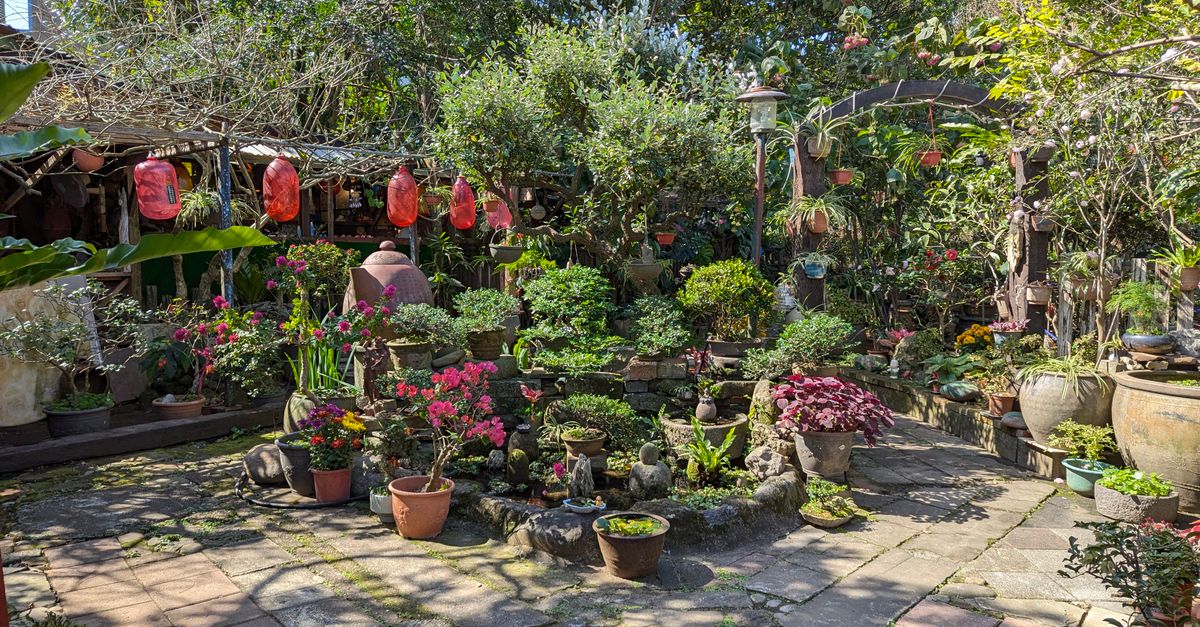
Why Your Garden Always Looks 'Messy' (And What Actually Works for Effortless, Year-Round Beauty)
Does your garden feel like a battleground, constantly demanding your attention yet never quite achieving that serene, cultivated look you admire in magazines? You spend hours weeding, pruning, and planting, only to step back and see a chaotic mess just days later. You envision lush borders, vibrant colors, and orderly beds, but instead, you get overgrown patches, bare spots, and plants fighting for survival. It’s frustrating to invest so much effort and passion into your outdoor space, only to feel like you’re perpetually behind, battling nature rather than harmonizing with it. I’ve been there, staring out at my own unruly garden, wondering if I was simply doomed to a life of endless, fruitless toil. I tried everything: meticulously planned planting schemes, aggressive weeding schedules, even buying expensive tools. Nothing seemed to stick, and the dream of an effortlessly beautiful garden felt increasingly out of reach. But after years of trial and error, I discovered that the problem wasn’t my effort; it was my approach. The conventional wisdom about gardening often leads us astray, creating more work and less beauty. What truly works is a shift in mindset and a few strategic, counter-intuitive changes that leverage nature’s own strengths, rather than fighting against them. This isn’t about giving up gardening; it’s about gardening smarter, for genuine, lasting beauty that doesn’t demand your every waking moment.
Key Takeaways
- Embrace a ‘lazy gardener’ mindset by working with nature’s tendencies, not against them, to reduce constant effort.
- Focus on dense planting to suppress weeds and create a lush, full appearance, rather than leaving bare soil.
- Prioritize structural plants and year-round interest to maintain visual appeal even outside peak bloom times.
- Understand your garden’s microclimates and soil to select plants that will thrive with minimal intervention.
The Illusion of Bare Soil: Why Gaps Invite Chaos
The biggest mistake I see in most ‘messy’ gardens is the abundance of bare soil. We’re taught to plant in neat rows or with ample space between plants, leaving large swaths of earth exposed. The intention is often to allow plants room to grow or to make weeding easier, but in practice, it’s an open invitation for weeds. Bare soil is nature’s vacuum; it will be filled, and often by whatever opportunistic seeds are blowing in the wind. In my early gardening days, I’d spend hours meticulously weeding a bed, leaving it pristine, only to see a new crop of weeds emerge within days. It was a disheartening cycle.
What changed everything for me was embracing dense planting, often referred to as ‘gardening in layers’ or ’ भरती’ (bhav-tee) in some permaculture circles. Instead of spacing out plants according to strict nursery recommendations, I started planting closer together, creating a living mulch. Think of it like a beautiful tapestry woven with plants rather than distinct, isolated specimens. This strategy has a few powerful benefits: first, it physically shades the soil, dramatically reducing weed germination and growth. Less light, fewer weeds. Second, the dense root systems of your desired plants outcompete any rogue weed seeds that do manage to sprout. Third, it creates a much fuller, richer aesthetic, giving the impression of abundance and thoughtful design, even with less effort. When I started doing this, my weeding time dropped by over 70% in established beds. It felt like magic. Instead of fighting weeds, my plants were doing the work for me. Start by filling any bare patches, even with groundcovers or annuals, and gradually transition to a more densely planted, layered garden over time.
Chasing Blooms: The Trap of Peak Season Myopia
Many gardeners, myself included initially, fall into the trap of designing primarily for peak bloom season – usually late spring to early summer. We envision a glorious explosion of color, and then, after the main show, the garden deflates into a sea of fading foliage and uninspired greenery. This focus on transient beauty is a primary reason gardens often look messy for the majority of the year. Once the flowers are gone, all that’s left are the struggling stems and the empty promise of next year. This leads to a constant feeling that the garden is ‘past its prime’ or ‘needs work’ outside of a very short window.
The counter-intuitive solution is to prioritize structural plants and year-round interest. This means thinking beyond just flowers. When I revamped my design approach, I started asking: what does this plant offer in fall? In winter? Does it have interesting bark, seed heads, or evergreen foliage? For instance, I incorporated more ornamental grasses that provide movement and texture through winter, evergreens that offer a consistent backdrop, and shrubs with striking berries or interesting branch structures. Consider plants like hydrangeas (for their dried flower heads in winter), dogwood shrubs (for vibrant red or yellow stems), or sedums (for their late-season blooms and persistent seed heads). Aim for a balanced composition where something is always offering visual appeal, even if it’s not a showy flower. This shift ensures that even in the ‘off-season,’ your garden looks intentional, well-maintained, and beautiful, transforming it from a seasonal show to a year-round masterpiece that requires less urgent intervention.
Fighting Your Site: The Futility of Force
One of the most common reasons gardens look messy and high-maintenance is that gardeners are constantly fighting their site’s natural conditions. We fall in love with a plant at the nursery, bring it home, and try to force it into a spot where it simply won’t thrive. Planting a sun-loving rose in deep shade, or a moisture-loving fern in sandy, dry soil, inevitably leads to a struggling, sickly plant. These plants become magnets for pests and diseases, refuse to grow vigorously, and ultimately contribute to a patchy, unkempt appearance that demands endless fussing with fertilizers, pesticides, and constant watering.
My personal awakening came after multiple failures with plants I adored but that simply hated my heavy clay soil and intense afternoon sun. I realized I was setting myself (and the plants) up for failure. The secret, which sounds obvious but is often overlooked, is to choose the right plant for the right place. This means truly understanding your microclimates (sunny spots, shady corners, wet areas, dry slopes) and, critically, your soil composition. Get a soil test. Understand its pH and texture. Observe your garden throughout the day and year. Are there pockets of frost? Areas of intense wind? Then, research plants that naturally thrive in those exact conditions. What grows well in your neighbor’s low-maintenance garden? What native plants are suited to your region? When plants are happy, they grow vigorously, resist pests, and require minimal intervention. They fill in beautifully, look healthy, and contribute to that effortless, lush aesthetic. It’s a fundamentally ‘lazy gardener’ approach: let the plants do the hard work of thriving when they are in their ideal environment.
Over-Reliance on Annuals: The Cycle of Renewal
Annuals offer instant gratification, and there’s certainly a place for them to inject seasonal pops of color. However, an over-reliance on annuals is a surefire way to guarantee your garden looks perpetually ‘in progress’ or ‘messy’ outside of their short bloom window. Once annuals fade, they leave behind empty spaces, dead foliage, and the looming task of replanting next season. This creates a constant cycle of purchasing, planting, and disposal, which is both time-consuming and expensive. It also contributes to the feeling that your garden is always unfinished, always in need of a ‘refresh.’
To achieve true effortless beauty, shift your focus to a robust backbone of perennials, shrubs, and trees. These are the long-term residents of your garden, establishing themselves and returning year after year, often growing larger and more beautiful with each passing season. In my garden, I started by drastically reducing my annual purchases and investing more in high-quality perennials that would come back on their own. Instead of filling large beds with annual petunias, I opted for large drifts of coneflowers, salvias, and hostas. These plants require far less attention once established, and their consistent presence creates a sense of permanence and maturity. This doesn’t mean banishing annuals entirely; they can still be used strategically in containers or for specific bursts of color. But by building a strong foundation of permanent plantings, you create a garden that largely takes care of itself, evolving beautifully over time with minimal annual fuss, thus reducing that ‘messy’ feel and constant need for renewal.
Ignoring Garden Edges: The Fuzzy Boundary Problem
One subtle yet powerful contributor to a messy-looking garden is poorly defined or ignored edges. When lawn grasses creep into garden beds, or soil and mulch spill onto pathways, the entire space loses its crispness and intentionality. It’s like having a beautiful painting without a frame – the elements just bleed into one another, creating visual confusion. This fuzzy boundary problem immediately makes a garden feel unkempt, even if the plants themselves are well-maintained. The contrast between a neatly defined bed and a sprawling lawn or path is what gives a garden its polished, professional appearance.
My solution was to invest in clean, deliberate edging. This doesn’t necessarily mean expensive stone borders (though they can be lovely). Sometimes, it’s as simple as digging a crisp, shallow trench with a spade between the lawn and the bed, or installing a simple, inexpensive metal or plastic edge. The key is consistency and maintenance. Once you establish that clear line, the visual impact is immediate. I make it a point to re-edge my beds once a year in early spring, and then maintain the crispness with a string trimmer or edger every few weeks when I mow. This small, consistent effort pays huge dividends in overall garden appearance. It clearly delineates garden from non-garden, creating order and making the space feel intentionally designed, even if the planting within the beds is a bit wilder. It acts as the ‘frame’ that elevates the entire garden picture from messy to masterpiece.
Frequently Asked Questions
Q: How do I start densely planting if I already have an established garden with spaced-out plants?
A: Start small. Identify bare spots or areas where annual weeds are particularly problematic. Gradually add groundcovers, smaller perennials, or even self-seeding annuals like calendula or cosmos to these areas. Over time, as existing plants grow and mature, you can strategically introduce new plants in between to fill gaps. Don’t feel you have to rip everything out; it’s a gradual process of infilling and observation.
Q: What are some good structural plants for year-round interest that aren’t evergreens?
A: Consider plants with interesting bark, like Red Twig Dogwood (Cornus sericea) or River Birch (Betula nigra). Many ornamental grasses, such as Feather Reed Grass (Calamagrostis x acutiflora ‘Karl Foerster’) or Little Bluestem (Schizachyrium scoparium), maintain their form and color through winter. Coneflowers (Echinacea) and Sedums (Hylotelephium spectabile) leave attractive seed heads that provide winter interest and food for birds. Even deciduous shrubs like Oakleaf Hydrangea (Hydrangea quercifolia) have beautiful exfoliating bark in winter.
Q: My soil is really bad (heavy clay/sandy/rocky). Do I have to amend everything?
A: Not necessarily. While amending with compost can always help, the most effective long-term solution is to choose plants that naturally prefer your existing soil type. For heavy clay, look for plants that tolerate poor drainage, like some willows, dogwoods, or hostas. For sandy soil, seek out drought-tolerant plants such as sedum, lavender, or many native grasses. Research plants specifically adapted to your local soil conditions. Working with, rather than against, your soil will save you immense effort and lead to healthier plants.
Q: How often should I re-edge my garden beds to keep them looking tidy?
A: For a truly crisp edge, aiming for once a year in early spring is a great baseline. This initial re-edging sets the stage for the season. After that, simply using a string trimmer or edger every time you mow your lawn will maintain that clean line and prevent grass from encroaching. It becomes a quick, integrated part of your regular yard maintenance rather than a separate, daunting task.
Q: Won’t dense planting lead to overcrowding and disease problems?
A: This is a common concern, but done correctly, dense planting shouldn’t lead to significant issues. The key is to still understand the mature size of your plants and provide just enough space for air circulation. The goal isn’t to suffocate plants, but to eliminate bare soil. Healthy, well-chosen plants in their ideal environment are actually more resilient to disease. The competition for nutrients also means stronger, more efficient root systems. Think of it as creating a mini-ecosystem where plants support each other, rather than leaving individual plants isolated and vulnerable.
Shifting from a mindset of constant battle to one of strategic partnership with nature is the ultimate secret to an effortlessly beautiful garden. By embracing dense planting, focusing on year-round interest, selecting the right plants for your site, prioritizing perennials, and defining your edges, you’ll transform your outdoor space from a chaotic mess into a serene, inviting sanctuary that works with you, not against you. Stop chasing the perfect bloom and start cultivating a resilient, vibrant landscape that offers joy and beauty with minimal fuss. Your garden (and your free time) will thank you for it.
Written by Emily Chen
Well-being & Relationships
A community advocate who understands the nuances of balancing personal goals with social connections and responsibilities.
You Might Also Like

Why Your Homemade Pizza Lacks That Perfect Crisp (And The Pro Secrets That Deliver Pizzeria-Quality Crunch Every Time)
Unlock the secrets to truly crispy homemade pizza crust. Stop soggy bottoms and learn what works for pizzeria-quality crunch.

Why Your Homemade Soup Is Bland (And The Flavor Secrets That Changed Everything For Me)
Discover the overlooked reasons your homemade soup lacks flavor and the simple, impactful techniques that transform it into a culinary masterpiece.

Why Your Homemade Pizza Isn't Crispy (And The Pro Secrets That Deliver Pizzeria-Quality Crunch Every Time)
Stop soggy pizza! Discover why homemade crusts lack crispness and learn the pro secrets for pizzeria-quality crunch every time.